Western Herbal Medicine

Personalised Western Herbal Medicine in the Hawkesbury
Western Herbal Medicine is one of the oldest and most established traditions of plant-based medicine in the world. For thousands of years, medicinal plants have been used to support health, restore balance and treat illness, and that tradition continues today through modern medical herbalism.
At Kurrajong Natural Medicine Centre, Western Herbal Medicine is provided by Susan O’Neill-Siegenthaler, a highly qualified and experienced medical herbalist with more than 40 years of clinical practice. Susan creates personalised herbal prescriptions using medicinal plants chosen specifically for the individual rather than using a one-size-fits-all approach.
Whether you are seeking support for digestive health, hormonal balance, stress, sleep, skin health or general wellbeing, Western Herbal Medicine offers an individualised, whole-person approach to healthcare.
The World's Oldest Form of Medicine
The use of medicinal plants is the oldest form of medicine known to humanity.
Long before the development of modern pharmaceutical drugs, people throughout the world relied on medicinal plants to treat illness and maintain health. Every traditional medical system—including Western Herbal Medicine, Traditional Chinese Medicine, Ayurveda and Indigenous healing traditions—developed an extensive knowledge of medicinal plants suited to their environment and culture.
Western Herbal Medicine represents the European and Western herbal tradition, with a history stretching from Ancient Egypt, Greece and Rome through the medieval herbalists to contemporary medical herbalism.
From Herbal Medicine to Modern Pharmacology
The history of Western Herbal Medicine is also part of the history of pharmacology.
Early physicians and herbalists carefully observed the effects of medicinal plants and recorded their therapeutic uses. These observations became the foundation for centuries of herbal practice.
Roman physician and natural historian Pliny the Elder compiled one of the earliest comprehensive pharmacopoeias of medicinal plants. Modern historians have described Pliny’s pharmacopoeia as the cradle of pharmacotherapy, recognising its influence on the development of medicinal treatment.
As scientific methods developed, researchers began identifying, isolating and studying many of the active constituents found naturally in medicinal plants. This process helped shape the development of modern pharmacology while herbal medicine continued as its own complete system of healthcare.
Medicinal Plants That Changed Medicine
Many modern medicines have their origins in medicinal plants.
One of the best-known examples is White Willow Bark (Salix species).
For centuries willow bark was used traditionally to relieve pain and fever. Researchers later isolated salicin, investigated its conversion to salicylic acid, and this work ultimately contributed to the development of acetylsalicylic acid (aspirin).
This is one example of how traditional herbal knowledge contributed to modern drug development.
Western Herbal Medicine, however, continues to use the medicinal plant itself rather than isolated synthetic compounds, recognising that plants contain many naturally occurring constituents that work together within the whole herb.
How Does Western Herbal Medicine Work?
Medicinal plants contain hundreds of naturally occurring compounds, including flavonoids, alkaloids, glycosides, tannins, volatile oils, saponins and many other phytochemicals.
Rather than acting through a single isolated chemical, whole medicinal plants contain a complex combination of constituents that contribute to their traditional therapeutic actions.
Modern research has greatly expanded our understanding of medicinal plants, while traditional herbal knowledge continues to guide how herbs are selected and prescribed.
The effectiveness of a medicinal herb depends on many factors, including:
- the species of plant used
- growing conditions and soil quality
- harvesting time
- processing and storage
- preparation method
- dosage
- the individual receiving treatment.
This is why professional herbal prescribing is based on individual assessment rather than simply choosing herbs for symptoms.
What Can Western Herbal Medicine Support?
Western Herbal Medicine has traditionally been used to support many aspects of health and wellbeing. At Kurrajong Natural Medicine Centre, herbal medicine is prescribed according to the individual’s health history and presenting concerns.
Western Herbal Medicine can treat most common health problems including, but not limited to:
Digestive Health: Western Herbal Medicine has a long tradition of supporting healthy digestive function and addressing digestive discomfort.
Stress, Sleep and Emotional Wellbeing: Many medicinal plants have traditionally been used to support the nervous system, healthy sleep and emotional resilience.
Women’s Health: Medical herbalism has a rich tradition of supporting women through different stages of hormonal and reproductive health.
Skin Health: Medicinal herbs may be prescribed internally or externally to support healthy skin.
General Health and Wellbeing: Western Herbal Medicine can also be part of an individualised approach to supporting overall health, recovery and resilience.
Others include:
- Musculoskeletal disorders
- Endocrine issues
- Men’s health
- Nervous system disorders
- etc.
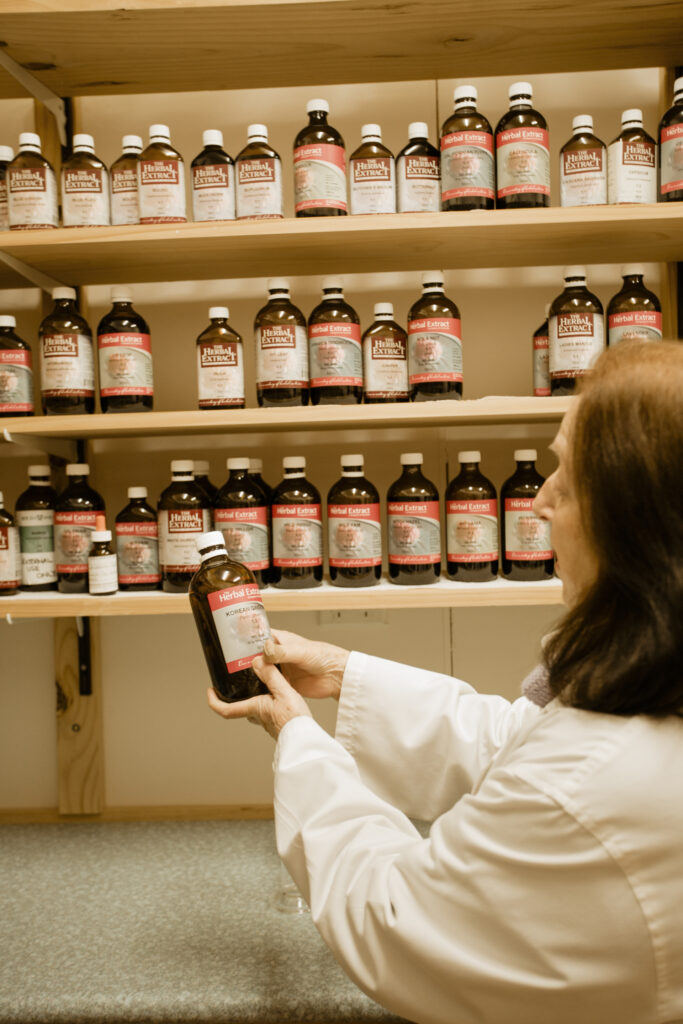
Herbal Preparations Used in Western Herbal Medicine
Herbal medicines can be prescribed in several forms, depending on the herbs selected and the individual’s preferences.
- Liquid herbal extracts (tinctures) — traditional personalised herbal mixtures.
- Herbal teas — prepared from selected medicinal plants.
- Tablets and capsules — convenient preparations where appropriate.
- Creams, lotions and ointments — topical herbal preparations for local application.
Every prescription is tailored to the individual consultation.
What Happens During a Consultation?
A Western Herbal Medicine consultation is comprehensive and individualised.
Susan will discuss:
- your current health concerns
- your medical history
- medications and supplements
- diet and lifestyle
- sleep and stress
- previous treatments
- other factors relevant to your health.
From this assessment, Susan develops a personalised herbal prescription and explains how your herbs should be taken. Your prescription can be modified over time as your health changes or your treatment progresses.
Is Western Herbal Medicine Safe?
Just like pharmaceutical medications, medicinal herbs have physiological effects. For this reason, herbal medicine should not be assumed to be risk-free simply because it comes from plants.
Some herbs can interact with prescription drugs or over-the-counter medicines. Other herbs, just like pharmaceutical drugs, may not be appropriate during pregnancy, breastfeeding or in particular health circumstances.
This is why a thorough consultation is essential.
Your herbalist should know about medications, supplements and other treatments you are using so that these factors can be taken into account when developing your herbal treatment approach.
If you are taking prescribed medication, you should not stop or alter your medication without discussing this with the healthcare professional who prescribed it.
Western Herbal Medicine and Chinese Herbal Medicine
Western Herbal Medicine and Chinese Herbal Medicine both make extensive use of medicinal plants, but they are different traditions of herbal medicine.
Western Herbal Medicine developed from Western and European herbal traditions and draws on traditional herbal knowledge alongside modern understanding of medicinal plants and their constituents.
Chinese Herbal Medicine forms part of Traditional Chinese Medicine (TCM) and uses the diagnostic principles of TCM, including pattern differentiation, when developing herbal prescriptions.
At Kurrajong Natural Medicine Centre:
Susan O’Neill-Siegenthaler practises Traditional Naturopathy and Western Herbal Medicine.
Danny Siegenthaler provides Chinese Herbal Medicine as part of his Traditional Chinese Medicine practice.
Both approaches use medicinal plants, but the way herbs are selected, formulated and prescribed is based on different medical traditions.
You can learn more about our Chinese Herbal Medicine service on our dedicated Chinese Herbal Medicine page.
About Susan O'Neill-Siegenthaler, Medical Herbalist
Susan O’Neill-Siegenthaler is a traditionally trained Naturopath and medical herbalist with more than 40 years of experience.
She is a graduate of Denis Stewart and Dorothy Hall, both well-known Australian herbalists, and holds an Honours degree in Biology (BSc Hons).
Susan is a Member of the Australian Traditional Medicine Society (ATMS).
Her extensive experience in herbal medicine is complemented by her background in naturopathy, aromatherapy and yoga. She also uses her knowledge of yoga therapy to help patients working to regain mobility and flexibility following injury or surgery.
Susan’s approach to treatment of her patients with herbal medicine is based her extensive knowledge and experience in medicinal plants and natural healthcare.
Western Herbal Medicine in the Hawkesbury
Kurrajong Natural Medicine Centre provides Western Herbal Medicine consultations for people throughout the Hawkesbury and surrounding areas, including Kurrajong, North Richmond, Richmond, Windsor, Wilberforce, Glossodia, East Kurrajong, Blaxlands Ridge, Freemans Reach, Bowen Mountain and Kurrajong Heights.
If you are looking for a medical herbalist and naturopath in the Hawkesbury, Susan can discuss your health concerns and appropriate treatment approach with you.
Book a Western Herbal Medicine Consultation
If you would like to explore how herbal medicine may help you with your health concerns, contact Kurrajong Natural Medicine Centre to arrange a consultation with Susan.
Call 0492 814 971 to make an appointment.
Written and reviewed by Dr Danny T. Siegenthaler, Chinese Medicine Practitioner – MSc. (TCM), BSc. (Hons.), DTCM; DAc (Aust/China)
AHPRA Registration Number: CMR0001712202; Member of ATMS No. 23926
Disclaimer
Disclaimer information for users of the Kurrajong Natural Medicine Centre website.
THE INFORMATION PROVIDED IN ANY OF THE ARTICLES PUBLISHED ON THIS SITE IS FOR EDUCATION AND INFORMATION PURPOSES ONLY.
NO CLAIMS ARE MADE AS TO THE EFFECTIVENESS OF ANY OF THE TREATMENTS USING WESTERN HERBAL MEDICINE OR THAT THIS THERAPY IS SUITABLE FOR THE READER.
THE SOURCES OF ALL THE ARTICLES ARE LISTED AND COME FROM REPUTABLE PEER-REVIEWED SCIENTIFIC JOURNALS. WHERE POSSIBLE LINKS TO THE ORIGINAL SOURCE ARE PROVIDED FOR THE READER TO FOLLOW.
Articles published on this page are not intended to provide diagnosis, treatment or medical advice. Content provided on this page is for informational purposes only. Please consult with a physician or other healthcare professional regarding any medical or health related diagnosis or treatment options. Information on this page should not be considered as a substitute for advice from a healthcare professional. The claims made about specific products throughout this article are not approved to diagnose, treat, cure or prevent disease.
Information provided for education and research information only
The information on this website is presented by Kurrajong Natural Medicine Centre for the purpose of disseminating health information free of charge for the benefit of the public.
While Kurrajong Natural Medicine Centre has exercised due care in ensuring the accuracy of the material contained on this website, the information on the site is made available on the basis that Kurrajong Natural Medicine Centre is not providing professional advice on a particular matter.
This website is not a substitute for independent professional advice. Nothing contained in this site is intended to be used as medical advice and it is not intended to be used to diagnose, treat, cure or prevent any disease, nor should it be used for therapeutic purposes or as a substitute for your own health professional’s advice.
Kurrajong Natural Medicine Centre does not accept any liability for any injury, loss or damage incurred by use of or reliance on the information provided on this website.
Quality of information
Kurrajong Natural Medicine Centre makes every effort to ensure the quality of the information available on this website and updates the information regularly. Before relying on the information on this site, however, users should carefully evaluate its accuracy, currency, completeness and relevance for their purposes, and should obtain any appropriate professional advice relevant to their particular circumstances. Kurrajong Natural Medicine Centre cannot guarantee and assumes no legal liability or responsibility for the accuracy, currency, completeness or interpretation of the information.
The material may include the views or recommendations of third parties and does not necessarily reflect the views of Kurrajong Natural Medicine Centre or indicate a commitment to a particular course of action.
Links to other websites
This website contains links to other websites which are external to Kurrajong Natural Medicine Centre. Kurrajong Natural Medicine Centre takes reasonable care in selecting linking websites but Kurrajong Natural Medicine Centre accepts no responsibility for material contained in a website that is linked to this site. It is the responsibility of the user to make their own decisions about the accuracy, currency, reliability and correctness of information contained in linked external websites.
Links to external websites are provided for the user’s convenience and do not constitute an endorsement or a recommendation of any third party products or services offered by virtue of any information, material or content linked from or to this site. Users of links provided by this site are responsible for being aware of which organisation is hosting the site they visit.
Views or recommendations provided in linked sites may include the views or recommendations of third parties and do not necessarily reflect those of Kurrajong Natural Medicine Centre or indicate a commitment to a particular course of action.