Acupuncture for Low Back Pain
Author: Dr Danny T. Siegenthaler
Chinese Medicine Practitioner – MSc. (TCM), BSc. (Hons.), DTCM; DAc (Aust/China)
Low back pain is one of the most common reasons why people seek medical help. It may develop suddenly or gradually, and can be short-lived, persistent or recurrent.
Frequently low back pain is described as non-specific low back pain, meaning that no specific underlying disease or structural problem can be identified as the cause. Non-specific low back pain can be acute or chronic, and a sudden episode of low back pain can occur without an identifiable underlying condition.
At Kurrajong Natural Medicine Centre, we use acupuncture and Chinese herbal medicine (CHM) as individualised approaches to the management of low back pain.
Research has investigated acupuncture for low back pain, particularly chronic non-specific low back pain, with systematic reviews and meta-analyses reporting reductions in pain and improvements in function and mobility.
What is low back pain?
Low back pain refers to pain or discomfort in the lower part of the back, generally between the lower edge of the rib cage and the lower buttocks.
It can range from mild discomfort and stiffness through to more severe pain that interferes with normal activities.
Low back pain may:
- develop suddenly
- develop gradually
- occur after physical activity or an injury
- come and go
- persist for weeks or months
- recur after a previous episode.
In many cases, there is no single identifiable cause. This is commonly referred to as non-specific low back pain.
The term “non-specific” does not mean that the pain is not real. Rather, it means that a specific underlying pathology cannot be identified as the cause of the symptoms.
Acute, persistent and recurrent low back pain
Low back pain can be considered according to its duration and pattern.
Acute low back pain develops over a relatively short period and may occur suddenly. Like chronic non-specific low back pain, acute episodes can also be non-specific, with no identifiable underlying disease or structural cause.
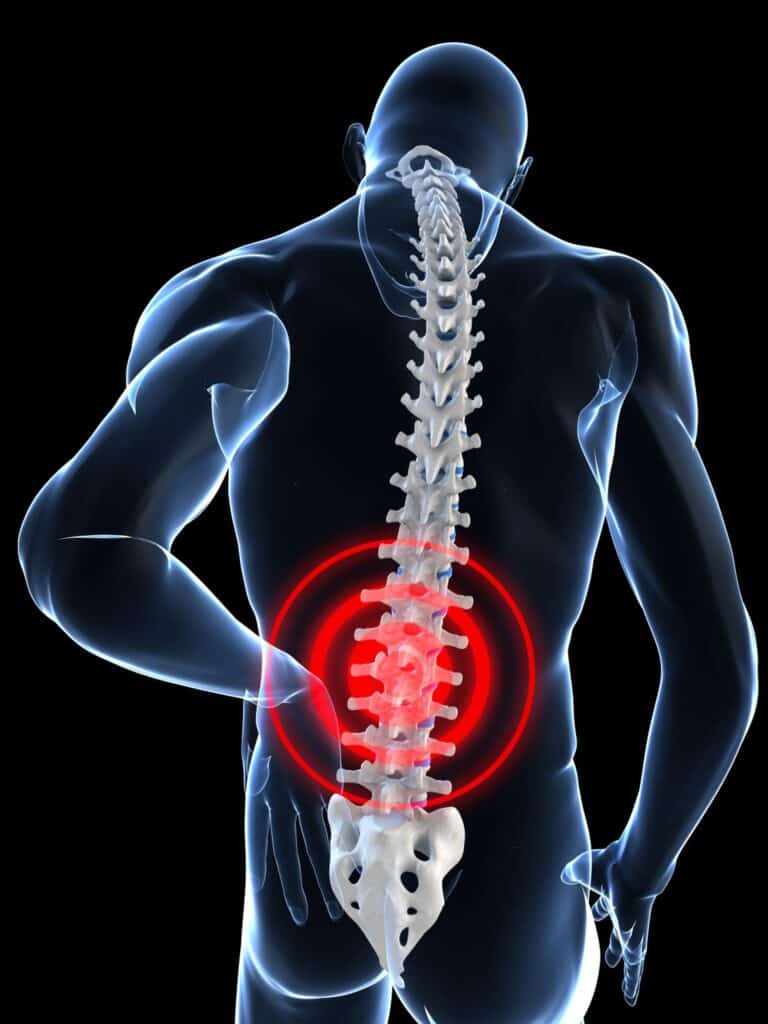
Persistent or chronic low back pain continues for a longer period and may have a substantial effect on physical function and quality of life.
Recurrent low back pain refers to episodes that return after a period of improvement.
These are different presentations of low back pain rather than necessarily different conditions. For this reason, our approach is to consider the person’s individual presentation rather than treating “acute” or “chronic” low back pain as completely separate conditions.
What causes low back pain?
There are many possible contributors to low back pain.
Sometimes the pain follows an obvious event such as lifting, physical exertion or an injury. In other cases, it can develop without an obvious trigger.
When no specific underlying condition can be identified, the pain is generally described as non-specific low back pain.
Structures in and around the lower back, including muscles, ligaments, joints and intervertebral discs, may be involved in the experience of pain, but it is often not possible to determine that one particular structure is responsible.
This is one reason why the management of low back pain increasingly considers the individual as a whole rather than focusing exclusively on a single anatomical structure.
Clinical practice guidelines for low back pain vary internationally, but commonly emphasise appropriate assessment and non-invasive approaches to management.
What does the research say about acupuncture for low back pain?
Acupuncture has been investigated extensively as a treatment for low back pain. The evidence base is particularly developed for chronic non-specific low back pain.
A 2020 Cochrane review examined acupuncture for chronic non-specific low back pain and assessed its effects compared with sham acupuncture, no treatment and usual care.
A 2023 systematic review and meta-analysis by Giovanardi and colleagues examined acupuncture either as an alternative to, or in addition to, conventional treatment for chronic non-specific low back pain.
Earlier systematic review evidence has also reported favourable effects of acupuncture on pain and functional limitations in chronic non-specific low back pain, although the authors noted limitations including heterogeneity between studies and methodological quality.
Taken together, this research provides a substantial evidence base for considering acupuncture as one option in the management of low back pain, particularly non-specific chronic low back pain.
However, the evidence should not be interpreted as meaning that acupuncture is effective for every person with every type of low back pain.
The research is important, but it is also important to understand what it actually studied.
Chronic non-specific low back pain
This is where the evidence base for acupuncture is particularly substantial.
The 2020 Cochrane review specifically examined chronic non-specific low back pain.
The 2023 systematic review and meta-analysis also specifically examined chronic non-specific low back pain and considered acupuncture both as an alternative to conventional treatment and as an addition to conventional treatment.
The 2013 systematic review by Lam, Galvin and Curry included 32 studies, with 25 contributing data to the meta-analysis. The authors reported clinically meaningful improvements in self-reported pain and function in some comparisons, while also highlighting heterogeneity and methodological limitations.
Acute low back pain
Acute low back pain is also represented in the research literature, although the evidence base is not identical to that for chronic non-specific low back pain.
The 2015 systematic review and meta-analysis by Yuan and colleagues included studies of both chronic and acute low back pain. It reported moderate evidence that acupuncture was more effective than sham acupuncture for reducing pain immediately after treatment in both chronic and acute low back pain.
This is one reason we consider acute low back pain to be part of the broader low back pain topic rather than creating a separate page for it.
Acupuncture and the nervous system
One area of more recent research concerns how acupuncture may influence the nervous system and the processing of pain.
Huang and colleagues published a systematic review and meta-analysis in 2025 examining neuroimaging evidence concerning central mechanisms of acupuncture in non-specific low back pain.
The review examined neuroimaging findings associated with acupuncture for non-specific low back pain. These findings may help researchers investigate possible central mechanisms, but further high-quality research is needed to clarify their clinical significance.
This type of research is useful for investigating how acupuncture may influence pain processing, but it should not be interpreted as proof that a particular mechanism explains every individual’s response to acupuncture.
It is also important to distinguish research investigating possible mechanisms from clinical evidence demonstrating whether a treatment improves outcomes such as pain or function.
Low back pain from a Traditional Chinese Medicine perspective
Traditional Chinese Medicine takes a different approach to understanding pain from conventional biomedical models.
Rather than focusing exclusively on identifying a particular anatomical structure responsible for pain, a TCM practitioner considers the person’s overall pattern of signs and symptoms.
TCM theory associates the lower back particularly with the Kidney system, while other systems, channels and patterns may also be considered depending on the individual presentation.
Traditional TCM patterns associated with low back pain may include:
- Qi and Blood stagnation
- Cold and Dampness
- Kidney deficiency
- other patterns identified through individual assessment.
These are concepts within the traditional Chinese medicine diagnostic framework. They should not be confused with biomedical diagnoses.
One of the principles of TCM is therefore that two people with apparently similar low back pain may receive different TCM assessments and treatment approaches.
How we approach acupuncture for low back pain
At Kurrajong Natural Medicine Centre, treatment begins with an individual assessment.
We consider factors such as:
- where the pain is located
- how and when it began
- whether it developed suddenly or gradually
- what makes the pain better or worse
- whether movement affects the symptoms
- whether the pain is persistent or recurrent
- relevant health history
- other symptoms that may help establish a TCM pattern.
The information obtained from the consultation helps us determine whether acupuncture and/or other aspects of Chinese medicine are appropriate.
Treatment may involve acupuncture and, where appropriate, other components of Chinese medicine such as moxibustion or Chinese herbal medicine.
The treatment approach is individualised rather than applying exactly the same acupuncture treatment to everyone with low back pain. We may also consider dietary improvements and exercise where it is relevant.
Where applicable, we work collaboratively with other allied health professionals and GPs to provide integrative pain management.
Acupuncture for sudden or acute low back pain
A sudden episode of low back pain can be particularly disruptive.
Acute low back pain may develop following physical activity, lifting or an awkward movement, although sometimes there is no obvious trigger.
It is important to recognise red-flag symptoms that can indicate a serious medical condition, particularly loss of bladder or bowel control, numbness around the groin or buttocks, or progressive or severe weakness in both legs. Fever or major trauma may also require prompt medical assessment.
Research into acupuncture has included acute low back pain as well as chronic low back pain. The evidence therefore does not require us to treat acute and chronic low back pain as completely separate conditions.
If your pain is severe, unusual, follows significant trauma or is accompanied by other concerning symptoms, appropriate medical assessment is important before assuming that it is uncomplicated low back pain.
What can you do yourself?
For many people, maintaining appropriate levels of normal activity is preferable to prolonged bed rest. Depending on your individual circumstances, helpful strategies may include:
Keep moving: Gentle movement and ordinary daily activities, within your capabilities, can help prevent unnecessary stiffness and loss of conditioning.
Avoid prolonged inactivity: If you spend long periods sitting or standing, changing position regularly and taking movement breaks may be helpful.
Gradually return to normal activity: Following an episode of low back pain, gradually returning to usual activities may be preferable to avoiding movement for an extended period.
Heat or cold: Some people find heat soothing, while others prefer cold during an acute episode. Use whichever is comfortable and appropriate for your circumstances.
Seek appropriate professional advice: If your pain is persistent, recurrent, severe or interfering significantly with your normal activities, discuss it with an appropriately qualified health professional.
When should low back pain be medically assessed?
Although many episodes of low back pain are not associated with serious underlying disease, not all back pain is non-specific low back pain.
Seek appropriate medical assessment if you experience symptoms that are severe, unusual, worsening or concerning.
As mentioned above, but worth repeating, prompt assessment is particularly important where low back pain is associated with symptoms such as:
- significant trauma
- unexplained weight loss or systemic illness
- significant loss of sensation
- problems controlling the bladder or bowel
- numbness around the genital or anal area
- progressive weakness
- other symptoms that concern you.
If you are uncertain whether your symptoms are appropriate for acupuncture or other complementary care, speak with your doctor or another appropriately qualified health professional.
Low back pain, Sciatica and Pregnancy
Not every presentation involving the lower back belongs on this page.
Related conditions:
Sciatica: Sciatica typically involves pain radiating from the lower back or buttock into the leg. For more information about this distinct presentation, read our Acupuncture for Sciatica page.
Low back pain during pregnancy: Pregnancy-related back pain requires consideration of pregnancy-specific factors. Read our Acupuncture for Low Back Pain During Pregnancy page for further information.
Acupuncture for low back pain at Kurrajong Natural Medicine Centre
At Kurrajong Natural Medicine Centre, acupuncture and Traditional Chinese Medicine form part of our approach to musculoskeletal health.
Our approach is based on individual assessment rather than a one-size-fits-all treatment protocol.
Dr Danny T. Siegenthaler has extensive experience in acupuncture and Traditional Chinese Medicine, including the assessment and management of musculoskeletal complaints. This experience informs his individualised approach to assessing whether Chinese medicine is appropriate for each person’s presentation.
If you would like to discuss whether acupuncture may be suitable for your low back pain, contact Kurrajong Natural Medicine Centre to arrange an appointment.
Frequently Asked Questions
Can acupuncture help low back pain?
Research has investigated acupuncture for low back pain, particularly chronic non-specific low back pain. Systematic reviews and meta-analyses have reported improvements in pain and/or function in some comparisons, although outcomes vary between studies and individuals.
Is acupuncture suitable for acute low back pain?
Acute low back pain has also been studied in acupuncture research. A systematic review and meta-analysis published in 2015 included evidence relating to acute as well as chronic low back pain.
Whether acupuncture is appropriate for an individual depends on many factors, including their age, symptoms and overall health.
What is non-specific low back pain?
Non-specific low back pain is low back pain for which no specific underlying disease or pathology can be identified as the primary cause. It can be acute, persistent or recurrent.
How many acupuncture treatments will I need?
There is no single number of treatments appropriate for everyone. The appropriate treatment approach depends on the nature and duration of the pain, the individual assessment and how well the person responds.
Is low back pain the same as sciatica?
No. We address acupuncture for sciatica separately.
Evidence and References
Key research
Huang FF, Liu J, Lu M, Wu Y, Zhen S, Cai Y, Liu Z, Qiu M, Xiao W, Huang Y, Liang J, Li M and Liu Z (2025) Neuroimaging evidence for central mechanisms of acupuncture in non-specific low back pain: a systematic review and meta-analysis. Front. Med. 12:1657241. doi: 10.3389/fmed.2025.1657241
Giovanardi CM, Gonzalez-Lorenzo M, Poini A, et al. Acupuncture as an alternative or in addition to conventional treatment for chronic non-specific low back pain: a systematic review and meta-analysis. Integr Med Res. 2023;12(3):100972. doi:10.1016/j.imr.2023.100972.
Lam M, Galvin R, Curry P. Effectiveness of acupuncture for nonspecific chronic low back pain: a systematic review and meta-analysis. Spine (Phila Pa 1976). 2013;38(24):2124–2138. doi:10.1097/01.brs.0000435025.65564.b7.
Mu J, Furlan AD, Lam WY, Hsu MY, Ning Z, Lao L. Acupuncture for chronic nonspecific low back pain. Cochrane Database Syst Rev. 2020;12:CD013814. doi:10.1002/14651858.CD013814.
Yuan QL, Guo TM, Liu L, Sun F, Zhang YG. Traditional Chinese medicine for neck pain and low back pain: a systematic review and meta-analysis. PLoS One. 2015;10(2):e0117146. doi:10.1371/journal.pone.0117146.
Zhou T, Salman D, McGregor AH. Recent clinical practice guidelines for the management of low back pain: a global comparison. BMC Musculoskelet Disord. 2024;25:344. doi:10.1186/s12891-024-07468-0.
Written and reviewed by Dr Danny T. Siegenthaler, Chinese Medicine Practitioner – MSc. (TCM), BSc. (Hons.), DTCM; DAc (Aust/China)
AHPRA Registration Number: CMR0001712202; Member of ATMS No. 23926