Acupuncture for Low Back Pain During Pregnancy
Author: Dr Danny T. Siegenthaler
Chinese Medicine Practitioner – MSc. (TCM), BSc. (Hons.), DTCM; DAc (Aust/China)
Low back pain is very common during pregnancy. As pregnancy progresses, changes in posture, weight distribution, movement and the musculoskeletal system can place additional demands on the lower back and pelvis.
For some women, the discomfort is mild and temporary. For others, pregnancy-related low back pain can interfere with sleep, work, movement and everyday activities.
Acupuncture for low back pain during pregnancy is an area that has been studied in clinical research, with systematic reviews reporting that acupuncture may help reduce pain in pregnant women experiencing pregnancy-related low back pain.
At Kurrajong Natural Medicine Centre, acupuncture treatment is individually tailored to each woman’s symptoms, stage of pregnancy and individual circumstances.
What is pregnancy-related low back pain?
Low back pain during pregnancy refers to pain or discomfort experienced in the lower back during pregnancy.
Pregnancy-related low back pain may occur on its own or alongside pelvic girdle pain. Although the two can overlap, they are not necessarily the same condition.
Pain may be associated with:
- aching or discomfort across the lower back
- stiffness
- muscular tension
- difficulty changing position
- discomfort when standing or walking
- difficulty getting comfortable in bed
- pain associated with prolonged sitting or standing
- reduced ability to carry out normal daily activities.
Pregnancy-related pelvic girdle pain can involve the sacroiliac joints, pubic symphysis, buttocks, hips or thighs and may also be felt in the lower back. Because there are several possible causes of pain during pregnancy, persistent or significant symptoms should be appropriately assessed.
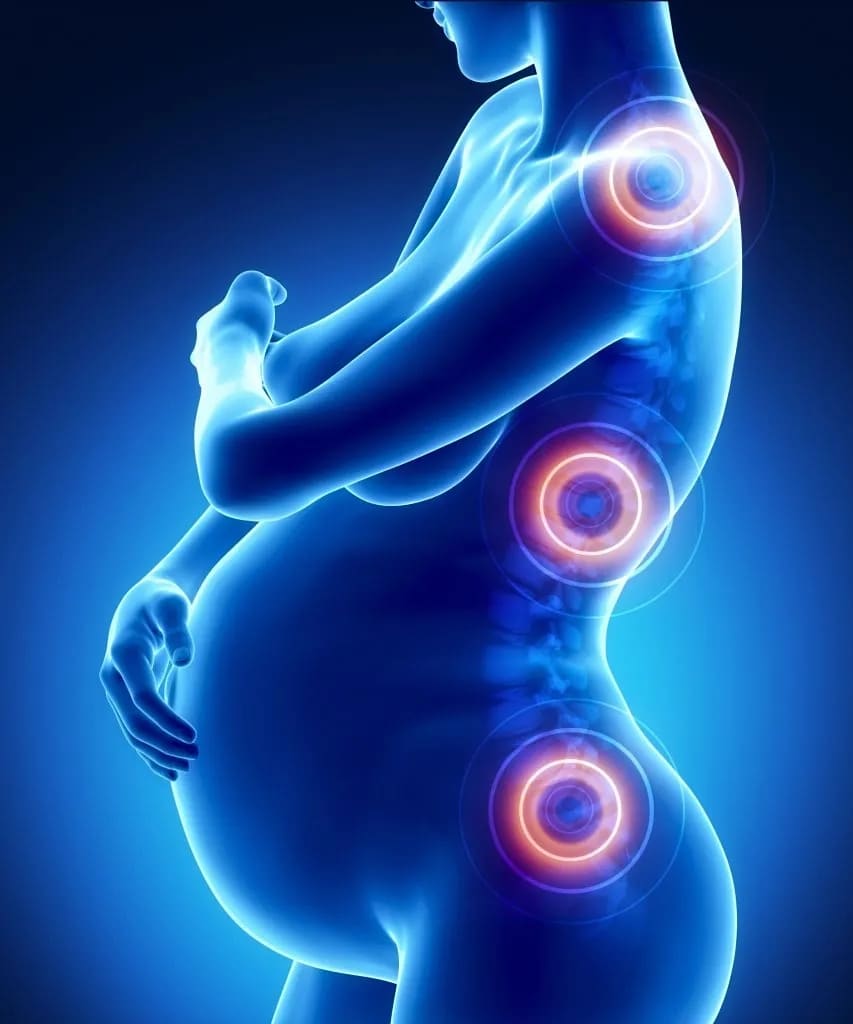
Why does low back pain occur during pregnancy?
Pregnancy involves substantial physical changes.
As the baby grows, the distribution of weight changes and the body adapts to accommodate the pregnancy. Postural changes can alter the way the muscles and joints of the lower back and pelvis are loaded.
For some women, these changes can contribute to low back or pelvic discomfort.
Low back pain may become more noticeable as pregnancy progresses and can affect sleep, work, movement and other daily activities.
It is important, however, not to assume that all back pain during pregnancy is simply a normal consequence of pregnancy. There are different possible causes of pain, and symptoms that are severe, unusual, persistent or associated with other concerning symptoms should be medically assessed.
Acupuncture for Low Back Pain During Pregnancy
Acupuncture for low back pain during pregnancy has been investigated as a non-pharmacological approach to pregnancy-related back pain.
A 2023 systematic review and meta-analysis examined 12 randomised controlled trials involving 1,302 participants. The researchers reported a reduction in pain scores following acupuncture compared with control interventions and found no significant difference in preterm delivery rates between the groups.
More recently, a 2025 systematic review and network meta-analysis examined eight studies involving 864 participants with pregnancy-related low back pain. It found that acupuncture for low back pain during pregnancy produced greater analgesic effects than standard care. The review also reported favourable results for acupuncture in measures of overall treatment response and quality of life, while noting variation in the evidence.
Taken together, this research provides evidence that acupuncture for low back pain during pregnancy can help manage pregnancy-related low back pain, while recognising that individual responses vary.
How might acupuncture help?
The mechanisms through which acupuncture affects pain are still being investigated.
Research into acupuncture and its ability to reduce pain is not yet well understood. There are many identified effects, some involving the nervous system, others the endocrine system as well as the body’s pain-processing mechanisms. Acupuncture may also influence muscle activity and other physiological processes associated with pain.
For this reason, acupuncture should be presented as an approach that may help manage symptoms, rather than as a treatment that corrects a particular anatomical cause unless that cause has been appropriately diagnosed.
A Traditional Chinese Medicine (TCM) Perspective
Traditional Chinese Medicine has its own diagnostic framework for understanding musculoskeletal pain during pregnancy.
Within TCM, pregnancy is regarded as a significant physiological state in which the body’s resources are being directed towards supporting the developing pregnancy.
A TCM practitioner considers the individual’s particular pattern of signs and symptoms rather than assuming that all pregnancy-related low back pain has the same underlying pattern.
Traditional diagnostic considerations may include concepts such as:
- Qi and Blood stagnation
- Kidney deficiency
- Qi deficiency
- Cold or Damp influences
- muscular tension and localised stagnation.
These are traditional Chinese medicine concepts and should not be interpreted as biomedical, physical organ-specific diagnoses or as explanations for the anatomical cause of pregnancy-related back pain.
The TCM assessment considers the location and character of the pain, factors that aggravate or relieve it, movement, sleep, digestion and other aspects of the individual’s presentation.
This traditional assessment helps the practitioner individualise the acupuncture treatment.
What happens during acupuncture treatment?
When consulting a TCM practitioner with respect to having acupuncture for low back pain during pregnancy, he or she will first discuss your symptoms and relevant health history with you.
Particular attention will be given to your pregnancy and any other factors that may be relevant to your treatment. The acupuncture approach is then individualised according to your presentation.
Depending on your circumstances, acupuncture points may be selected on areas such as the back, buttocks, legs, arms or other parts of the body. Treatment does not necessarily involve needling directly into the area where you experience pain.
Your comfort and positioning are also important considerations during pregnancy.
Treatment is provided by a qualified and experienced practitioner who takes your stage of pregnancy and individual circumstances into account.
Is acupuncture safe during pregnancy?
Acupuncture during pregnancy requires appropriate knowledge and clinical experience.
Research examining acupuncture for low back pain during pregnancy has not identified a significant increase in serious adverse events in the available studies. This does not mean that acupuncture is automatically appropriate for every pregnant woman.
Your practitioner should be informed that you are pregnant and should be made aware of relevant medical and pregnancy-related circumstances before treatment.
If you have a complicated pregnancy or are under the care of an obstetrician, midwife or other healthcare professional for a particular pregnancy-related condition, acupuncture should be considered within that broader care plan.
Acupuncture and pelvic girdle pain during pregnancy
Low back pain and pelvic girdle pain can overlap during pregnancy.
Pelvic girdle pain can involve the sacroiliac joints, pubic symphysis, hips, buttocks and thighs. It may make activities such as walking, climbing stairs, getting in and out of a car or turning over in bed difficult.
Because pelvic girdle pain and low back pain are not necessarily the same condition, an appropriate assessment is important. When girdle pain is part of the pain presentation, treatment using acupuncture for low back pain during pregnancy can be modified to address girdle pain as well.
If your pain appears to involve the pelvis as well as the lower back, your practitioner can take this into consideration when discussing whether acupuncture is appropriate.
Where necessary, referral to your GP, midwife or obstetrician may also be appropriate.
What you can do to help manage low back pain during pregnancy
Acupuncture can form part of a broader approach to managing pregnancy-related low back pain.
Depending on your circumstances, the following may also be helpful:
Keep moving – Avoid unnecessary prolonged bed rest. Gentle movement and appropriate activity can help maintain mobility and function. The type and amount of activity that is appropriate will depend on your individual circumstances.
Change position regularly – Remaining in one position for extended periods may aggravate back discomfort. Where possible, change position regularly and take appropriate movement breaks.
Consider your sleeping position – Finding a comfortable sleeping position can become increasingly difficult as pregnancy progresses. Pillows or other supports may help some women find a more comfortable position.
Seek appropriate exercise advice – A suitably qualified health professional, such as a physiotherapist experienced in pregnancy and pelvic health, can provide individualised advice about exercise and movement.
Don’t ignore persistent or worsening pain – If pain is persistent, severe, worsening or interfering substantially with your daily activities or sleep, discuss it with your healthcare professional.
When should you seek medical advice?
Although back and pelvic pain are common during pregnancy, not every episode of pain should automatically be attributed to pregnancy-related musculoskeletal changes.
Seek appropriate medical assessment if you experience symptoms such as:
- severe or worsening pain
- pain occurring without an obvious musculoskeletal trigger
- vaginal bleeding or fluid leakage
- fever or feeling significantly unwell
- significant numbness or weakness
- loss of bladder or bowel control
- pain following a fall or injury
- other symptoms that concern you.
These symptoms require appropriate medical assessment rather than relying on acupuncture or other complementary therapies. Australian pregnancy health guidance similarly recommends medical assessment when back or pelvic pain occurs with concerning symptoms such as bleeding, fluid leakage, fever, neurological symptoms or injury.
Acupuncture for Low Back Pain During Pregnancy at Kurrajong Natural Medicine Centre
At Kurrajong Natural Medicine Centre, we take an individualised approach to acupuncture for low back pain during pregnancy.
Dr Danny T. Siegenthaler has more than 40 years of clinical experience in Traditional Chinese Medicine and acupuncture. Treatment is based on your individual presentation and incorporates traditional Chinese medicine assessment alongside an understanding of contemporary research.
Our aim is to provide a calm, individualised treatment environment and to work appropriately alongside your existing pregnancy care.
If you would like to discuss whether acupuncture may be appropriate for your pregnancy-related low back pain, contact us to arrange an appointment by calling 0492 814 971.
Frequently Asked Questions
Can acupuncture help with low back pain during pregnancy?
Yes, research suggests that acupuncture for low back pain during pregnancy can help to reduce back pain associated with pregnancy. However, the evidence has limitations and individual responses vary.
Is acupuncture safe during pregnancy?
Research examining acupuncture for low back pain during pregnancy has not identified a significant increase in serious adverse events in the available studies. Appropriate practitioner training, individual assessment and consideration of the pregnancy are important.
When can I have acupuncture for pregnancy-related back pain?
Acupuncture for low back pain during pregnancy can be considered at any time during pregnancy, but your individual circumstances and stage of pregnancy should be discussed with an appropriately qualified and registered TCM practitioner. If you have a complicated pregnancy or other medical concerns, discuss complementary treatment with your pregnancy care team.
Is pregnancy-related low back pain the same as sciatica?
Not necessarily. Pregnancy-related low back pain is generally centred around the lower back, whereas sciatica typically involves pain or other symptoms radiating into the buttock and leg.
For more information, see Acupuncture for Sciatica.
Is pelvic girdle pain the same as low back pain?
No. Pelvic girdle pain involves the joints and structures of the pelvis and can cause pain around the lower back, hips, buttocks, groin or thighs. The two conditions can occur together, however and can be treated at the same time.
How many acupuncture treatments will I need?
There is no standard number of treatments that applies to every woman. Treatment frequency depends on your symptoms, stage of pregnancy, response to treatment and individual circumstances.
How is low back pain in pregnancy different from non-specific low back pain?
You can visit ‘Acupuncture for Low Back Pain‘ to learn more.
References and Further Reading
- Pai MYB, Hohl A, Souza LRC, Mendes MV, Sampaio LCS, Tsai AWW. Acupuncture for pregnancy-related pain in the lower back and posterior pelvic girdle. Rev Assoc Med Bras (1992). 2023;69(suppl 1):e2023S101. Published 2023 Aug 4. doi:10.1590/1806-9282.2023S101 (https://pubmed.ncbi.nlm.nih.gov/37556620/)
- Li R, Chen L, Ren Y, et al. Efficacy and safety of acupuncture for pregnancy-related low back pain: A systematic review and meta-analysis. Heliyon. 2023;9(8):e18439. doi:10.1016/j.heliyon.2023.e18439.
- Ternov NK, Grennert L, Aberg A, Algotsson L, Akeson J. Acupuncture for lower back and pelvic pain in late pregnancy: a retrospective report on 167 consecutive cases. Pain Med. 2001;2(3):204-207. doi:10.1046/j.1526-4637.2001.01031.x (https://pubmed.ncbi.nlm.nih.gov/15102252/)
- Vas J, Cintado MC, Aranda-Regules JM, Aguilar I, Rivas Ruiz F. Effect of ear acupuncture on pregnancy-related pain in the lower back and posterior pelvic girdle: A multicenter randomized clinical trial. Acta Obstet Gynecol Scand. 2019;98(10):1307-1317. doi:10.1111/aogs.13635 (https://pubmed.ncbi.nlm.nih.gov/31034580/)
- Liddle SD, Pennick V. Interventions for preventing and treating low-back and pelvic pain during pregnancy. Cochrane Database Syst Rev. 2015;2015(9):CD001139. Published 2015 Sep 30. doi:10.1002/14651858.CD001139.pub4 (https://pubmed.ncbi.nlm.nih.gov/26422811/)
- Li M, Xiao Z, Tan D, et al. Acupuncture for the treatment of pregnancy-related low back pain: A systematic review and network meta-analysis. J Back Musculoskelet Rehabil. 2025;38(5):960–967. doi:10.1177/10538127241301682.
Written and reviewed by Dr Danny T. Siegenthaler, Chinese Medicine Practitioner – MSc. (TCM), BSc. (Hons.), DTCM; DAc (Aust/China)
AHPRA Registration Number: CMR0001712202; Member of ATMS No. 23926